 Pagudpud has a beach reputed to have the longest contiguous white sand with mighty waves and strong winds.
Showing posts with label Philippine Tourist Spots. Show all posts
Showing posts with label Philippine Tourist Spots. Show all posts
Wednesday, December 19, 2007
Pagudpud White Sand Beach, Ilocos Norte
Pagudpud has a beach reputed to have the longest contiguous white sand with mighty waves and strong winds.

Maira-Ira Point, Blue Lagoon, Ilocos Norte
 Maira-Ira Point, gaining popularity with its secluded beach known as the Blue Lagoon. You could reach the beach from a secondary concrete road on the north side of Maharlika Highway, Laoag City.
Kabigan Falls, Pagudpud, Ilocos Norte
 Kabigan Falls is an enchanting falls located at the eastern part of Barangay Balaoi and it is around 1.8 kilometers away from the national highway. This 80 feet waterfall is surrounded by thick forest and well-known for its concaved basin.
Sunday, December 16, 2007
Banahaw
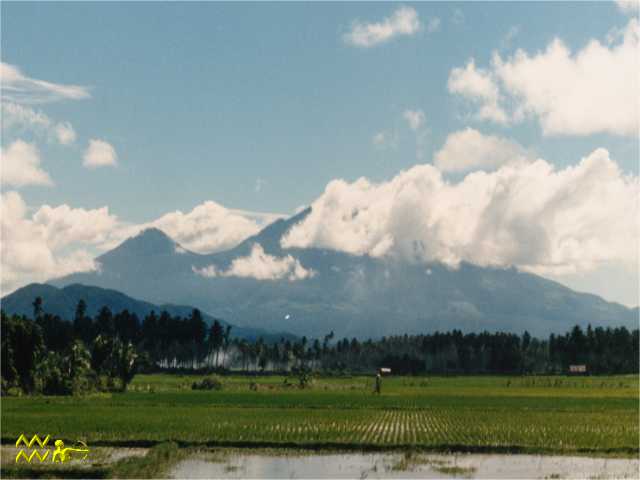
Banahaw towers over the southeastern towns of Laguna and Quezon. Revered as a mystical mountain, Banahaw has become a sanctuary for different religious cults. Up on Banahaw's leafy slopes live members of various religious sects who adhere to what seems to be a mixture of Catholicism, Buddhism, the cabala, animism and other forms of pagan worship. Down below, in the foothill towns, dwell amulet-makers, soothsayers, faith healers, diviners and dedicated UFO watchers.
Banahaw comes alive during the Lent when various religious sects re-enact the passion of Jesus Christ.
People ascend to Mount Banahaw to experience its cool weather, bathe in its hot springs or simply stand amazed at the sight of nature's beauty.
Mount Banahaw can be reached from both east and west. From the east, the ascent starts in Lucban, Quezon, while from the west, in Dolores, Laguna. For both climbs, it is advisable to have a guide to ensure a safe trip.
Sagada
 This Mountain Province town, situated west of Bontoc, boasts of its cool weather and spectacular sceneries. A pastoral upland valley, Sagada provides an endless expanse of mountain ranges which are clothed by fogs in the early morning.
Among its attractions are towering limestone cliffs, subterranean caves and unexplored forests. Some of Sagada's caves remain unconquered. Because of their length and depth, Sagada's natives believe that these caves lead to the center of the Earth.
Other sites to visit in Sagada are the Kitongan bottomless pit and underground river, Calvary Hill, Bukong Falls and Alipine Lake Banao. Sagada has accommodation facilities and can be reached by public buses from Banaue in Ifugao province or from Baguio City.
Tagaytay
 With an altitude of 2,250 feet above sea level, Tagaytay City enjoys a cool climate all year round.
This city perched on a ridge is located in the province of Cavite, some 56 kilometers south of Manila. It overlooks Manila Bay on the north, Taal Lake and Taal Volcano on the south, Laguna Bay on the east and the China Sea on the west. The city is linked to the Metropolitan Manila and the province of Batangas by the Aguinaldo Highway.
Among its attractions is the Tagaytay Picnic Grove where one can get an unobstructed view of Taal Volcano, which lies within a lake. Taal Volcano, which rises 406 meters from the lake, is reputedly the world's smallest volcano.
Taal Lake itself is an immense body of water formed when the old crater collapsed and the walls of the larger volcano caved in and sank.
A visit to the Volcano Island can be arranged through the Philippine Institute of Volcanology and Seismology in Quezon City which maintains a monitoring station on the island.
For visiting tourists, support facilities are readily available in this idyllic city. Tagaytay is the "sister" city of Las Vegas and Nevada, U.S.A; Tainan City, Taiwan; and Bankstown City, New South Wales, Australia.
Baguio City
 Rising 1,500 meters above the sea, Baguio City enjoys a relatively cool weather throughout the year. On the average, Baguio is at least eight degrees cooler than any place in the lowlands. Not surprisingly, Baguio has become the "summer capital" of the country. It is awarded with a variety of cultural, historical and scenic attractions which make it an important and interesting destination. As early as March, tourists and locals take the six-hour trek up the zigzagging Kennon Road. Within a mile of the city, the sweet scent of pine trees and flowers already permeate the air. Designed by Daniel Burnham during the American occupation, Baguio City is situated in the midst of pine-covered hills and valleys at the southern end of the Cordillera. Among its popular attractions are the well-manicured lawns of Club John Hay, the Mansion House and the Burnham Park.
 From Baguio City, one can proceed to the Banaue Rice Terraces, also considered as the eighth wonder of the world. An engineering marvel, this "Stairways to the Sky" was constructed by hand by the Ifugaos.
Camiguin Island
 Camiguin Island, known for its lanzones festival, offers white-sand beaches, spring resorts and magnificent caves untouched by industrial development. The island lies off the north coast of Mindanao. Aside from its beaches, Camiguin boasts of spring resorts and waterfalls.
The 62-square kilometer island-province has more volcanoes per square kilometer than any other island on Earth. Most famous of the island's seven volcanoes is Mt. Hibok-Hibok whose last eruption was recorded in 1951.
Among its popular attractions are the Ardent Spring Resort run by the Philippine Tourism Authority (PTA), the Mt. Hibok-Hibok itself, Santo Niño Cold Spring, Medano Islet, Mantigue Island and the lanzones festival.
There are local flights to Camuigin island.
Puerto Azul
 Situated on the southern entrance to Manila Bay and opposite Corregidor Island is Puerto Azul, a beach resort that offers a breathtaking sight with all its elegance and mystique.
Puerto Azul, a tourists' paradise in the outskirts of Ternate town in Cavite, boasts of flowery bushes, verdant hills and forests, blue sea, and fine sand beaches. Here, one can imagine one's self in the Biblical Garden of Eden (a little bit in the modern era, though).
The resort complex, which nestles within a 3,300-hectare nature reserve, houses two entities: the Puerto Azul Beach Hotel and the Puerto Azul Beach and Country Club. The club manages a world-class golf course designed by Gary Player and Ron Kirby and completed in 1978. It is now a popular venue for many prestigious championship tournaments.
Though Puerto Azul has always been synonymous with golf and the beach, now there are other things that one can do within the complex. Puerto Azul Beach Hotel has, in fact, prepared 30 fun-filled activities which can be done on one's own or with family.
Villa Escudero
 Villa Escudero, a coconut plantation village in San Pablo City, was developed by its owners into a tourist destination complete with swimming pools, picnic area, fishing grounds, and modern amenities. Special packages can be arranged to include overnight stay with food and accommodation.
The village offers a glimpse of plantation living. The whole area is surrounded by coconut trees and flowering plants. The estate also houses a museum whose collection ranges from fabulous antiquities to kitsch. Bamboo cottages grid a river that flows to a dam where picnickers gather around the tables set up on the water.
The village is a one-and-a-half hour drive south from Manila.
Hidden Valley, Laguna
 Hidden Valley Springs is one of the most popular resorts in Alaminos, Laguna. The valley nestles at the foot of Mt. Makiling, a mystical mountain associated with local myths.
A number of springs with hot, cold and soda water, lace a forest of huge fruit trees, tropical shrubs and flowering plants. A concrete path connects the pools and leads to the jungle's interior where a waterfall has cut a gorge down the mountainside.
The resort has cottages for overnight stay and restaurants. It is an ideal base for visiting the surrounding provincial towns of Laguna and Quezon.
Laguna Resorts
 Aside from Pagsanjan Falls, Laguna has a lot more to offer. Laguna has one of the Philippines' incredibly beautiful countryside sceneries. The province offers a scenic view of a bay, considered as the largest in the country. The towns of Calamba and Los Baños abound with swimming pools and resorts. Many residents of Metro Manila head for these towns during summer.
 In Calamba, one can proceed to the ancestral house of National Hero Dr. Jose Rizal. The house now serves as a museum and is a repository of Philippine history and culture.
Los Baños, on the other hand, is famous for its numerous hot springs. Considered as a flower basket in Luzon, Los Baños produces a wide variety of flowers and other ornamentals. Mt. Makiling, an extinct volcano, stands guard over the town.
Pagsanjan Falls
 A popular tourist destination, Pagsanjan Rapids and Falls is a series of 14 rapids punctuated by mini-waterfalls on the way to the main falls. Pagsanjan is a small Laguna town which served as the setting for Fracis Ford Coppola's film "Apocalypse Now."
The terrain towards the main falls offers a lot of exitement. As one negotiates the waterway, the trips becomes wilder, with the river flanked by towering cliffs lush with vegetation. Waters from the Cavinti and Luisiana dams cascade down Pagsanjan Falls and into a segregated part of the river which is about 150 feet deep. Here, one can rent a raft and enjoy riding under the falls.
Hundred Islands
 Northern Philippines boasts of white-sand beaches in Pangasinan and Ilocandia. Among the best tourist destinations is the Hundred Islands which can be reached from the Pangasinan town of Alaminos, where the lodging accommodations and restaurants are situated.
At Hundred Islands, the visitor may rent an island for one's own private beach for a day. Short boat rides take off from the village of Lucap to the Hundred Islands.
Beaches stretch along the western coast of Ilocos region. Among the popular beach resorts are Cresta del Mar, Bali Hai, Cabana and the Coconut Grove in La Union province.
Ilocos Norte also has fine resorts such as D'Coral Beach Resort and Fort Ilocandia.
Puerto Galera
 Puerto Galera (which means Galleon Port) is one of the most popular beach resorts in the Philippines. A marine reserve, it is endowed with coves, fine sandy beaches and shallow coral reefs ideal for snorkeling. The place can be reached from the port of Batangas City where a ferry service to Mindoro awaits the tourists.
Bancas may be hired to go to Escarceo Point, the best dive spot in Puerto Galera. The area offers positive thrills and guaranteed excitement, with its sudden rushes of strong currents and steep slopes which are a favorite gathering place for large pelagic fish. Diving expeditions are usually organized by certified masters on specific dive spots.
Anilao, Batangas

Situated in the southeast area of Batangas province, Anilao may be reached within three hours from Manila through public buses or jeepneys. From Anilao, one can start diving from the shore or go in bancas to nearby islands. Among them is Sombrero (Hat) Island, a marine preserve where sports activities are regulated.
Other dive spots in this side of Batangas are Mapating Rock at Maricaban Island, Caban Cove and Layag Layag Point.
Subic Bay
 Subic, the former US naval base in the Philippines, is now a hub for commerce and tourism. Just two-and-a-half hour drive north from Manila, Subic offers a full view of the blue mountain and sea and of the green background of a three-layered virgin forest.
Points of interest include the 18-hole Binictican Golf Course and Clubhouse, a white-sand beach, bowling and arcade center,a ship wharf past a restricted forested area, firing ranges, fishing grounds and an area for bungee jumping.
Visitors to Subic can take a 12-hour jungle survival course, visit an Aeta tribal village, take a bay cruise, explore the coves, end up at the white-sand beach of Grande Island, engage in water sports, go horseback riding or simply enjoy the scenic view of the sea.
Subic Bay is complete with tourism-support facilities that include a marina, a yacht club, hotels, shopping arcades and food shops. It also boasts of an international airport.
Bohol Island
 Bohol is one of the loveliest islands in southern Philippines. It is situated at the heart of Visayas and with coastline skimmed by gentle coves and white-sand beaches. Many highways snake along sparkling beaches or leafy rivers where one can stop at any point and jump in. With its rolling hills and plateaus, crystal springs and beaches, the province of Bohol is a picturesque province replete with ancestral homes and centuries-old churches. Bohol is composed of numerous isles -Panglao, Pamilacan, Cabilao, Jao, Mahanay and Lapinin, which are excellent dive spots. The Chocolate Hills is but one of the many natural wonders to be found in Bohol.
 The province is the home of the world's smallest monkey, the tarsier. The size of a fist, the tarsier lives on the hills of Corella, some ten kilometers from Tagbilaran. Other exotic flora and fauna may also be found amongst the forest of Bohol. Bohol's various mountainous and water formations also serve as a natural playground for the adventurous tourist. One can cruise its rivers, hike up the hills, swim the deep waters, or just stroll down the avenues. Bohol is just waiting to surprise you.
Tagbilaran, Bohol's capital town can be reached by plane or boat from Cebu and Manila. Numerous tourist inns and excellent resorts are found in Tagbilaran and Panglao island.
Samal Island

Samal Island offers unending fascination with its white-sand beaches, thick mangroves, coral reefs, rolling hills and rock formations.It is an archipelago of nine islands located in the Davao Gulf about 700 meters south of Davao City. An ideal model for resort and development, Samal Island provides a fabulous site for sunrise and sunset.
Samal Island, like the rest of Mindanao, is outside of the typhoon belt, and enjoys relatively calm weather. Its coastline is characterized by tall, swaying coconut trees, white sand beaches, rock formations, mangroves, coral reefs, and small fishing villages, all suggestive of a tropical island paradise.
Almost all of the beach areas have white sand, with widths varying from only a few meters to more than 10 meters. It provides ample space for picnic huts, reclining chairs for sun bathing, or for simply relaxing and enjoying the tropical scenery.
The water is crystal clear throughout the coastline, which varies in terrain from gently sloping sand beaches to steep cliffs and rock formations. The colors of the coastline at the beach areas transforms itself from the green lush vegetation of coconut trees, to the white sandy beaches, to the dark blue color of the sea, with its deep waters and coral reefs.
Among its popular attractions are the Aguinaldo Pearl Farm, the caves of Talikud Island, the White Stone Mountain, and the San Jose Muslim Fishing Village.
Siargao Island

This newly discovered island boasts of white-sand beaches and surfing waves compared to that of Hawaii. Lying 800 kilometers southeast of Manila, the tear-shaped Siargao Island is a perfect haven for the sun, sea, and surf buffs. It lies on the eastern portion of Surigao del Norte and on the southeastern tip of Mindanao. The island is a mass of tropical land with scores of reefs, points and white beaches.
Its promise as a surfing mecca in the making was discovered in 1993 by American surf photographer John Callahan who went to investigate the rumors of spectacular waves in a little known Mindanao town. He came back from his trip armed with stories about the lovely sun-drenched island and documented his find with beautiful photographs.
Siargao opened itself to the international surfing community by playing host to the Siargao Surfing Cup in the municipality of General Luna. Siargao's Cloud Nine break is said to be among the best in the world and foreign sportsmen view "the unparalleled surf of Siargao as a magnet for deep sea fishing, sailing, wind-surfing, kayaking, and sunbathing on miles of white sandy beaches that the reef-ringed island and its rich waters afford the visitor.
Subscribe to:
Posts (Atom)